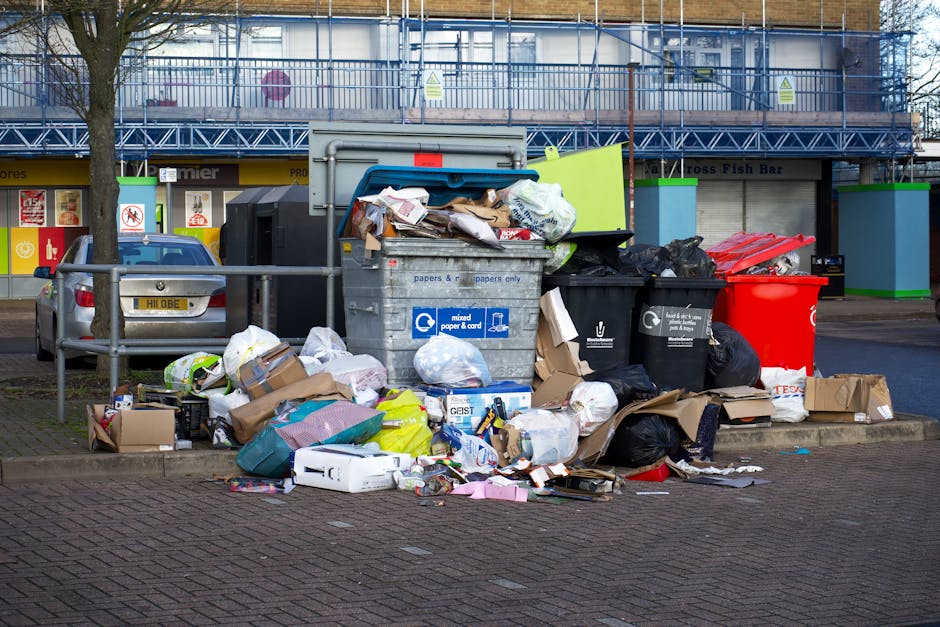
Rubbish removal guide for Osterley Park homes
If you live in or around Osterley Park, rubbish has a habit of building up quietly. One broken wardrobe in the hallway, a few bags from the loft, a stack of garden cuttings after a weekend tidy-up, and suddenly the place feels cluttered. This rubbish removal guide for Osterley Park homes walks you through the practical options, the usual pitfalls, and the smartest way to clear waste without making the job harder than it needs to be.
Truth be told, most people do not need a dramatic solution. They need the right one. Sometimes that is a skip, sometimes a man and van collection, and sometimes a straightforward rubbish removal service that takes the lot away in one go. The good news? Once you know what you are dealing with, the whole thing becomes much easier.
Below you will find a clear, local-friendly guide covering how rubbish removal works, when it makes sense, what to avoid, and how to choose between the main disposal methods. There is a lot to think about, but not in a stressful way. More in a "right, let's get this sorted" way.
Quick expert summary: For Osterley Park homes, the best rubbish removal choice usually depends on access, waste type, speed, and how much space you have. Domestic skip hire suits larger clear-outs, while rubbish removal is often ideal when you want the waste collected for you, especially if parking or lifting is awkward.
Table of contents
- Why rubbish removal matters for Osterley Park homes
- How rubbish removal works
- Key benefits and practical advantages
- Who this is for and when it makes sense
- Step-by-step guidance
- Expert tips for better results
- Common mistakes to avoid
- Tools, resources and recommendations
- Law, compliance, standards, or best practice
- Options, methods, or comparison table
- Case study or real-world example
- Practical checklist
- Conclusion
- Frequently asked questions
Why Rubbish removal guide for Osterley Park homes Matters
Rubbish removal matters because waste never stays harmless for long. It takes up room, gets in the way, and can turn a decent home project into a messy one. In a residential area like Osterley Park, that is more than just annoying. It can affect access, safety, and how quickly you can use your home again.
There is also a very practical side to it. If rubbish is left to pile up, it can become difficult to separate recyclable items from general waste. Wet cardboard starts breaking down. Garden waste goes soggy and heavy. Old furniture becomes awkward to move. And if you leave it too long, you may end up needing a bigger collection than you would have needed in the first place. That is a proper nuisance.
For homeowners, landlords, and tenants alike, the right rubbish removal approach saves time and reduces stress. It is especially useful when you are clearing after decorating, replacing furniture, tidying the loft, or dealing with a garden that has gone a bit wild. You know the sort of weekend: bags, dust, a wheelbarrow, and that one item nobody admits owning.
Local properties often have access quirks too. Narrow driveways, shared entrances, parked cars, and limited front-garden space can all affect what is practical. That is why the disposal method matters as much as the waste itself.
If you want a broader view of household waste solutions, it can also help to look at domestic skip hire and house clearance for bigger, more structured clear-outs.
How Rubbish removal guide for Osterley Park homes Works
At its simplest, rubbish removal is the process of collecting unwanted items or waste from your home and taking them to an appropriate disposal or recycling facility. The details depend on the method you choose, but the basic flow is easy enough.
You identify the waste, decide how quickly it needs to go, and choose the collection method that fits the job. For some households, that means booking a one-off pickup. For others, it means ordering a skip and filling it over a few days. There is no single "best" option for everyone, which is mildly annoying but also useful, because it gives you flexibility.
Most people in domestic settings are choosing between:
- a full rubbish removal service where waste is collected by a team,
- a skip placed on-site for you to load at your own pace,
- a grab-style collection for bulkier or heavier waste,
- or a wait-and-load option if you cannot leave a container in place for long.
That choice usually comes down to space, time, and the type of waste involved. For example, if you are clearing a loft, you may prefer a service that handles the lifting. If you are doing a long garden project, a skip may be more convenient. If the driveway is tight and parking is awkward, a wait-and-load or man-and-van style collection might be the tidy answer.
For specific items, the route can be different again. Appliances, mattresses, sofas, confidential paper, and some waste streams may need their own handling. That is where services such as fridge and appliance removal, mattress and sofa disposal, and confidential shredding can save a lot of faff.
Key Benefits and Practical Advantages
The biggest benefit is obvious: your space feels usable again. But there are a few less obvious advantages too.
- Less physical strain: You avoid multiple trips to the tip, heavy lifting, and the awkward shuffle of large items through hallways.
- Faster turnaround: One collection or one skip can clear a long list of jobs at once.
- Better sorting: A professional waste route makes it easier to separate recyclable material from general rubbish.
- Cleaner finish: For home improvements, clearing debris quickly helps the project feel complete rather than half-finished.
- More flexible planning: You can match the method to the scale of the job rather than forcing everything into one approach.
There is also a peace-of-mind element. If you are clearing a loft or garage, it is oddly easy to forget how much clutter has accumulated until you start moving it. Then the dust hits, the old boxes smell faintly of cardboard and damp, and you realise the job is bigger than it looked from the doorway. A proper removal plan keeps that moment manageable.
For garden jobs in particular, waste can become heavy very quickly once it is cut, bagged, or watered by the weather. If that sounds familiar, garden waste removal is worth considering alongside skip options.
Who This Is For and When It Makes Sense
This guide is useful for a wide range of people, not just homeowners in the middle of a renovation. In fact, a lot of rubbish removal jobs are modest, everyday tasks rather than full house clearances.
It makes sense if you are:
- decluttering a loft, garage, or spare room,
- replacing furniture or appliances,
- clearing post-renovation debris,
- tackling an overgrown garden,
- managing waste after a tenancy change,
- emptying a house before sale or let,
- dealing with a small building project,
- or simply wanting the waste gone without multiple journeys.
It also makes sense when you have a mixed load. A few bags of general rubbish, some old shelves, broken bits of timber, and a mattress can be awkward to handle yourself. Mixed waste is where a professional collection often saves the most time.
To be fair, not every job needs a skip. If you only have a small amount and access is good, a collection service can be less disruptive. If you have a longer project, a skip may work better. If you are not sure, compare your access and volume first, not just the item count.
For larger domestic jobs, it can also help to explore garage and loft clearance or house clearance if the waste is part of a bigger sort-out.
Step-by-Step Guidance
Here is a simple way to approach rubbish removal without overcomplicating it.
- Sort the waste into sensible groups. Keep general rubbish, recyclables, bulky items, garden waste, and anything potentially hazardous separate. It makes the next step much easier.
- Identify awkward items early. Fridges, mattresses, sofas, rubble, paint, and confidential paperwork may need special handling. Do not leave them until the end and then panic.
- Check access around the property. Think about driveways, gates, steps, parking, and where a vehicle or skip could safely sit.
- Estimate the volume. A rough visual check is fine. You are trying to avoid over-ordering or under-ordering, not win an engineering award.
- Choose the right disposal method. If you want the waste taken away for you, a collection service may suit. If you need time to fill waste gradually, consider a skip.
- Plan around timing. If the job is urgent, look for same-day availability. If not, book a slot that fits the rest of your schedule.
- Prepare the waste for collection. Break down what you can, stack safely, and keep pathways clear so the collection goes smoothly.
- Confirm what can and cannot go. This matters more than people think. A simple check can prevent delays or extra charges.
- Keep paperwork or receipts if needed. That is especially helpful for landlords, businesses, and anyone managing multiple jobs.
A useful starting point is what can go in a skip, because even if you are not hiring a skip, the same waste classification logic usually applies.
Expert Tips for Better Results
There are a few small things that make a big difference.
First, load with the end in mind. Heavy items should sit lower and lighter items above them if you are filling a skip. If you are booking a collection, group similar waste together so the team can move it efficiently. That kind of organisation sounds boring, but it genuinely saves time.
Second, keep weather in mind. A pile of cardboard or garden waste left out overnight in British drizzle turns into a much heavier, messier job by morning. One rainy evening and the whole thing has a new personality.
Third, do not mix questionable items into general waste. If something is hazardous, oily, chemical-based, or otherwise unusual, treat it separately. A proper route for hazardous waste disposal is better than guessing.
Fourth, think about security if waste will sit outside. For homes on busier roads, an enclosed option can be useful. If that applies, take a look at enclosed and lockable skip hire.
Fifth, use specialist help for heavy or awkward loads. It is often better to pay for the right method once than to do three exhausting trips and still have half the pile left.
And one more: if you are unsure, ask before loading. That simple conversation tends to prevent most headaches.
Common Mistakes to Avoid
Most rubbish removal problems are avoidable. The common mistakes are usually small ones that snowball.
- Underestimating volume: A roomful of "small items" can become a surprisingly large load once boxed, bagged, or broken down.
- Ignoring access issues: A service might be straightforward until a parked car, narrow passage, or awkward kerb makes it less so.
- Mixing prohibited items: This can lead to extra handling or refusal of collection.
- Leaving sorting too late: If everything is tipped into one pile, it takes longer to separate and manage properly.
- Choosing purely on price: Cheap can be fine, but only if it still suits the job. The wrong method often ends up costing more in time and rework.
- Forgetting permit rules: If a skip cannot go entirely on private land, a permit may be needed. That is worth checking early.
If you are considering a skip and are not sure about the rules, skip hire permits and skip permits are useful pages to review before you book.
Also, do not assume every item that looks recyclable is accepted in the same way. That one catches people out quite a bit.
Tools, Resources and Recommendations
You do not need much in the way of equipment, but a few practical tools make home rubbish removal smoother.
- Heavy-duty bags or rubble sacks: Better for sharp or bulky waste than thin bin bags.
- Gloves and sturdy shoes: Especially useful for lofts, gardens, and anything with broken edges or hidden nails.
- A tape measure: Handy if you are comparing skip sizes or checking whether a bulky item will fit through a doorway.
- Labels or marker pens: Useful for separating items into keep, recycle, remove, or unsure piles.
- A clear pathway: This sounds obvious, but it saves time and reduces the risk of damage.
On the service side, it is worth comparing a few routes before you decide. skip sizes and prices can help you understand scale and value, while wait and load skip hire may suit homes with limited space. If you need everything taken from the property with minimal lifting, man and van is often a practical fit.
For larger mixed loads or bulky clearance work, you may also want to compare grab hire services and grab lorry hire. They are not always the first thought for domestic jobs, but they can be very handy when waste is awkward, heavy, or stacked in a difficult spot.
Law, Compliance, Standards, or Best Practice
Rubbish removal in the UK should always be handled carefully and responsibly. You do not need to become an expert in waste law, but a few best-practice points matter.
First, use a reputable waste carrier. In plain English, that means the person or company taking your rubbish should be operating properly and disposing of waste lawfully. If waste is dumped illegally, the original owner can still end up with trouble. That is why checking who is taking the waste matters, even for a small job.
Second, separate hazardous items. Paints, chemicals, oils, batteries, and other risky materials should not be thrown into general household waste unless the service specifically allows them. If you are unsure, ask first. It is a better five-minute job than a much bigger problem later.
Third, expect sensible limits on what can go in a container or collection. Weight, contamination, and item type all affect what is acceptable. It is normal for services to restrict certain waste streams or require specialist disposal.
Fourth, think about property safety. Collection teams and homeowners should keep walkways clear, avoid over-stacking, and handle sharp or heavy waste carefully. That is especially relevant in tight domestic spaces.
Fifth, follow best practice on recycling. Good waste handling is not just about getting rid of things. It is also about recovering what can be reused or recycled where possible. If sustainability matters to you, recycling and sustainability is worth reading alongside any booking decision.
For a broader sense of the company's operating standards, you may also find insurance and safety and health and safety policy helpful, especially if you are dealing with a larger or more awkward clearance.
Options, Methods, or Comparison Table
If you are deciding how to remove waste from an Osterley Park home, this comparison can help narrow it down.
| Method | Best for | Pros | Things to watch |
|---|---|---|---|
| Rubbish removal collection | Mixed household waste, bulky items, small-to-medium clearances | Little lifting, fast turnaround, convenient | May cost more for large volumes than a skip |
| Skip hire | Projects over several days, renovations, garden work, loft or garage clear-outs | Flexible filling time, good for ongoing jobs | Needs space, possible permit requirements |
| Wait and load | Homes with tight access or no space for a skip | No long on-street container, quick loading window | Best if waste is ready to go at the collection time |
| Man and van | Bulky items, furniture, general mixed waste | Helpful when you want a team to do the carrying | Less suited to long-duration loading |
| Grab hire | Heavier or bulkier waste, larger outdoor piles | Efficient for sizeable loose waste | Needs decent access for the vehicle |
In practical terms, the decision usually comes down to this: if you need time, choose a skip; if you need hands-on help, choose collection; if access is limited, consider wait and load. Simple enough, though the details do matter.
If you are still unsure, a quick look at skip hire and same day skip hire can help you judge whether speed or flexibility is the priority.
Case Study or Real-World Example
Here is a typical scenario. A family in Osterley Park decides to clear a spare room, the garage, and the back garden in one weekend. It starts with a few old chairs and a broken shelf. Then there are garden bags, a mattress, some boxes of broken toys, and a pile of packaging from recent DIY work. By Sunday afternoon, the hallway is full and nobody wants to make one more trip.
In that kind of situation, the best route is often not just "take it all away somehow." It is to split the job logically. The mattress and sofa pieces go into a specialist disposal route. Loose garden waste is grouped together. General household clutter is checked for recyclables. If there is still a large mixed pile, a collection service or small skip can take the remainder.
The result is usually better than trying to do it piecemeal. Less back-and-forth. Less mess in the house. Less arguing over who said the old lamp was being kept. Small wins, really.
If the job had been more construction-led, a different route may have made sense. For heavier renovation debris, builders skip hire, builders waste removal, or construction waste disposal would have been the better comparison.
Practical Checklist
Use this before you book anything. It keeps the job tidy and saves last-minute confusion.
- Have I separated general waste from bulky items?
- Do I know whether any items are hazardous or specialist?
- Have I checked access, parking, and doorway width?
- Do I roughly know the amount of waste I have?
- Do I need a fast collection or a longer loading window?
- Will I need a permit if a skip is placed outside private land?
- Have I confirmed what can and cannot be loaded?
- Is there a clear path from the property to the collection point?
- Have I protected floors or walls if large items need moving through the house?
- Do I want recycling-focused disposal where possible?
A small note here: if you are clearing somewhere like a loft or garage, it is worth doing the sorting before the collection day, not during it. You will feel calmer for it. Honestly, much calmer.
Conclusion
Rubbish removal for Osterley Park homes does not need to be complicated. Once you know the size of the job, the type of waste, and how much access you have, the right method becomes much clearer. Some homes will suit a skip. Others will be better served by a direct collection or a flexible load-and-go option. The trick is to match the method to the real-world job, not the other way around.
And if you take one thing from this guide, let it be this: sort first, book second, and choose the waste route that makes life easier rather than more awkward. That one habit saves a lot of stress.
When you are ready to move forward, a simple comparison of service options and waste type is usually the quickest way to decide. No drama needed.
Get a free quote today and see how much you can save.
Frequently Asked Questions
What is the easiest way to remove rubbish from an Osterley Park home?
For small to medium household clearances, the easiest route is often a professional rubbish collection because the waste is taken away for you. For larger jobs, a skip may be simpler if you want time to load items gradually.
Do I need a skip or a rubbish removal service?
It depends on your access, waste volume, and how quickly you want the job done. If you want flexibility and have space, a skip can work well. If you want the lifting and loading handled, rubbish removal is usually more convenient.
What kind of waste can usually go in a skip?
Many household, garden, and renovation waste types can go in a skip, but some items are restricted. It is always worth checking guidance such as what can go in a skip before you book.
Can I get rid of a mattress or sofa through rubbish removal?
Yes, but bulky furniture is often handled best through specialist disposal or a collection service that accepts large household items. That keeps the process simpler and avoids awkward lifting.
What should I do with old appliances?
Fridges, freezers, washing machines, and similar items should be handled carefully because they often need a specific disposal route. Fridge and appliance removal is usually the safest and easiest option.
Do I need permission for a skip outside my home?
If the skip will sit on public land or a road, permission may be needed. Rules can vary, so checking skip hire permits or skip permits early is a sensible move.
How do I know which skip size I need?
The best way is to think in terms of waste volume rather than just item count. A few bulky items may need more space than a larger number of bags. The skip sizes and prices page is a useful starting point.
Is same-day rubbish removal available?
Sometimes, yes. Availability depends on the schedule and the type of waste involved. If speed matters, a same-day option can be very useful, especially when a room or garden needs to be cleared quickly.
What happens to the waste after collection?
Waste is typically sorted, with recyclable material separated where possible and the remainder sent to the appropriate disposal route. Good providers aim to handle this responsibly rather than just moving it on.
Is it better to hire a skip for garden waste?
It can be, especially if you have a lot of branches, soil, old fencing, or mixed green waste. If the job is smaller, dedicated garden waste removal may be the cleaner choice.
What if I have confidential paper or documents?
Do not put them into general rubbish if they contain personal or business information. A dedicated shredding service is the safer route, and confidential shredding is there for exactly that kind of need.
How can I keep costs down without cutting corners?
Sort your waste properly, choose the right method first time, and avoid mixing restricted items into general loads. Comparing options such as pricing and quotes can also help you make a sensible choice.
If you are still deciding between methods, it may help to explore the wider service range, including man and van, grab hire services, and waste recycling services. Different jobs, different fit. That is usually where the best result comes from.
And if you are ready to arrange the next step, a quick booking or enquiry is often the cleanest way to move from cluttered to clear. Nice and simple, which is how home projects should feel.